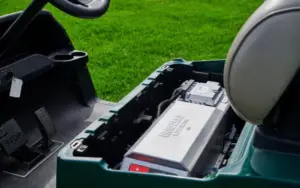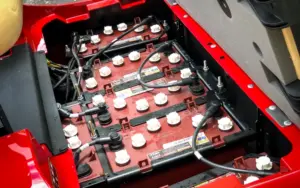

There is no single “best golf cart battery” for every vehicle. The right battery is the one that matches the cart’s system voltage, energy requirement, continuous and peak current demand, charger, available installation space, communication needs, expected service life, and documentation requirements.
A battery with a larger Ah rating or a higher advertised cycle count can still be the wrong choice if it cannot support the controller current, does not fit the battery compartment, or requires a different charging system. A better selection process starts with the application and then compares battery specifications against those requirements. This approach is especially important when evaluating a replacement or custom golf cart battery solution.
Define the Application Before Comparing Batteries
Before comparing battery brands or specifications, define what the vehicle actually needs to do. A golf cart used for short private trips has a different battery requirement from a resort shuttle, maintenance vehicle, or heavily loaded utility cart operating throughout the day.
A practical battery requirement should include:
| Selection Criterion | What to Define | Why It Matters |
|---|---|---|
| System voltage | 36V, 48V, or another vehicle platform | Determines basic electrical compatibility |
| Energy requirement | Daily distance and operating duty | Helps determine required Wh or kWh |
| Continuous current | Normal controller and motor demand | Determines sustained power capability |
| Peak current | Acceleration, hill starts, and short heavy loads | Determines short-duration power capability |
| Chemistry | Maintenance, lifecycle, weight, and cost priorities | Affects ownership requirements |
| Charger | Voltage, current, and charging profile | Must match the battery system |
| Dimensions | Available tray or compartment space | Determines mechanical fit |
| Communication | CAN, RS485, display, charger, or controller requirements | May be necessary for vehicle integration |
| Documentation | Transport tests, drawings, specifications, and applicable standards | Reduces procurement and compliance risk |
Once these requirements are defined, the meaning of “best” becomes much clearer. The goal is not to maximize every specification. It is to select enough capability for the intended duty without creating unnecessary cost, weight, or integration problems.
Match Voltage, Continuous Current and Peak Current
Electrical compatibility starts with system voltage, but voltage alone is not enough. The battery must also deliver the current required by the controller and motor under both normal and short-duration high-load conditions.
Continuous discharge current describes how much current the battery can deliver for sustained operation. This matters during normal driving, extended hill climbing, and prolonged operation with heavier loads.
Peak discharge current describes the higher current available for short periods such as acceleration, hill starts, or brief heavy-load events. Peak ratings should be read together with their permitted duration. A specification such as 400A for several seconds is very different from a battery capable of maintaining 400A continuously.
Current golf cart batteries on the market illustrate how independently these specifications are defined. Trojan’s OnePack family, for example, publishes separate continuous and instantaneous discharge ratings for different battery models. RELiON likewise specifies recommended continuous, maximum continuous, and short-duration peak discharge limits for its 48V InSight platform.
This distinction matters because a large-capacity battery is not automatically a high-power battery. Ah and kWh tell you how much energy is available; current ratings tell you how quickly the battery can safely deliver that energy.
Before choosing a pack, compare its continuous and peak-current ratings with the vehicle controller requirements rather than assuming that a larger Ah number guarantees sufficient power.
Size Capacity by Energy and Duty Cycle, Not Ah Alone
Capacity determines how much energy the cart has available between charges. However, Ah should not be evaluated without voltage.
A simple way to compare battery energy is:
Nominal Energy (kWh) ≈ Voltage × Ah ÷ 1,000
For example, a nominal 48V, 100Ah pack contains approximately 4.8kWh of energy. A higher Ah battery at the same voltage normally provides more stored energy, but that does not automatically make it the best option for every vehicle.
The required energy capacity should be based on the intended duty cycle:
- daily driving distance;
- passenger and cargo load;
- terrain and hill frequency;
- operating speed;
- available charging opportunities;
- the reserve capacity required at the end of the route or shift.
Golf cart manufacturers already use different battery-energy options for different operating targets. Club Car, for example, offers 4.0kWh and 7.0kWh lithium configurations within its Onward platform, demonstrating that battery sizing changes with the desired vehicle capability.
The key distinction is simple: energy capacity determines how much work is available, while discharge capability determines whether the battery can supply the required power. Both must be correct.
Choose the Chemistry for the Required Ownership Profile
Battery chemistry affects maintenance, weight, lifecycle expectations, charging behavior, and upfront cost. The best chemistry therefore depends on how the vehicle will be owned and operated.
Flooded Lead-Acid
Flooded lead-acid remains a familiar golf cart technology and may offer a lower initial purchase cost in some configurations. It requires routine maintenance, including checking electrolyte levels and keeping connections in good condition. Battery life is also strongly affected by charging practices, depth of discharge, and maintenance quality.
AGM
AGM batteries are sealed lead-acid batteries and remove the need for routine watering. They can be useful where maintenance access is undesirable, although they still retain many of the charging and aging characteristics associated with lead-acid chemistry.
LiFePO₄
LiFePO₄ packs are increasingly used where buyers value lower routine maintenance, lower weight, high cycle-life potential, integrated battery management, and higher usable energy efficiency. The tradeoff is that purchase cost and integration requirements can be different from a conventional lead-acid bank.
This does not mean LiFePO₄ is automatically the correct answer for every cart. A heavily used fleet may place high value on cycle life and reduced maintenance, while a low-utilization application may place more weight on upfront cost. Chemistry should support the ownership model rather than determine it by itself.
Confirm Charger, Physical Fit and Communication Before Buying
A battery is not fully compatible simply because its nominal voltage matches the cart. Charging, mechanical packaging, and communication must also work with the vehicle.
Charger Compatibility
The charger must support the battery chemistry, voltage window, charging profile, and current limits specified by the battery manufacturer. An existing lead-acid charger should not automatically be assumed suitable for a LiFePO₄ replacement.
The importance of charger matching can be seen in commercial products. Trojan supplies its 48V OnePack system with a charger using a lithium-specific charging algorithm, showing that the charging system is part of the battery integration rather than a separate afterthought.
Dimensions and Mechanical Fit
Check the battery compartment before purchase. Length, width, height, mounting points, terminal position, cable routing, and service access can all determine whether a pack can be installed cleanly.
Different manufacturers solve this problem differently. RELiON’s InSight 48V battery, for example, uses a GC2-format enclosure measuring 260 × 180 × 276 mm. Other lithium systems use one larger integrated enclosure instead of several GC2-size modules.
This is why physical dimensions should be verified rather than relying on descriptions such as “48V replacement” or “drop-in lithium.”
Communication and Monitoring
Communication requirements become increasingly important in modern golf carts and fleet vehicles. A battery may need to exchange information with a charger, controller, display, or vehicle-management system.
Do not confuse monitoring with vehicle communication. Bluetooth may allow an operator to view battery information on a phone, while protocols such as CAN or RS485 can provide system-level communication between vehicle components.
RELiON’s InSight platform, for example, uses CAN bus communication for operating information including voltage, current, state of charge, and state of health. Trojan’s newer OnePack S2 adds CAN connectors and remote diagnostic functions. These are product-specific examples, but they demonstrate why communication should be treated as a selection criterion when the application requires it.
Evaluate Service Life, Documentation and Supplier Support
Once several batteries meet the electrical and mechanical requirements, procurement risk becomes an important differentiator.
Start by checking how service-life claims are defined. A statement such as “3,000 cycles” is more meaningful when the supplier also states depth of discharge, operating conditions, and the remaining-capacity threshold used to define cycle life.
Then evaluate the documentation supplied with the battery. Useful B2B documentation may include:
- complete electrical specifications;
- continuous and peak-current limits;
- charging-voltage and temperature limits;
- mechanical drawings and terminal information;
- cycle-life test conditions;
- applicable safety testing or certification information;
- transport documentation for lithium batteries.
For lithium batteries entering transport channels, the UN Manual of Tests and Criteria contains Section 38.3 requirements addressing lithium cells and batteries. The exact documentation required for a project still depends on the battery, shipping method, destination, and applicable transport rules.
Safety standards should also be evaluated according to the target vehicle and market rather than treated as universal labels. UL Solutions identifies UL 2271 as a battery safety standard used for light electric vehicle applications, but the applicable certification requirements depend on the specific project and market.
Finally, consider whether the supplier can help review controller demand, charger compatibility, connectors, communication requirements, and mechanical fit. A well-documented LiFePO₄ golf cart battery backed by technical support can reduce the risk of selecting a pack that looks suitable on a datasheet but does not integrate cleanly into the vehicle.
Final Takeaway
The best golf cart battery is not necessarily the one with the largest Ah rating, longest range claim, or highest cycle count. The right choice is the battery that matches the vehicle’s voltage, energy demand, continuous and peak current requirements, charger, available space, communication architecture, lifecycle target, and documentation needs. Start with the application, then compare batteries against those requirements. This turns battery selection into a technical fit decision rather than a brand ranking and makes it much easier to identify which specifications actually matter for the vehicle.
Frequently Asked Questions
Is a higher Ah golf cart battery always better?
No. Higher Ah can provide more energy at the same voltage, but the battery must still meet current, size, weight, charger, and integration requirements. Extra capacity that the vehicle does not need may simply add cost or packaging constraints.
Can I install any 48V lithium battery in a 48V golf cart?
No. Matching nominal voltage does not confirm compatibility. Controller current, operating-voltage limits, charger requirements, dimensions, terminals, and communication should also be verified.
Which matters more: battery capacity or discharge current?
They answer different questions. Capacity determines how much energy the battery can store, while continuous and peak current determine whether it can supply the power required by the vehicle.