
Smart Meter Battery Solutions for Utility Meter Manufacturers
- SMART METER POWER REQUIREMENTS
What a Smart Meter Battery Must Deliver Over Its Service Life
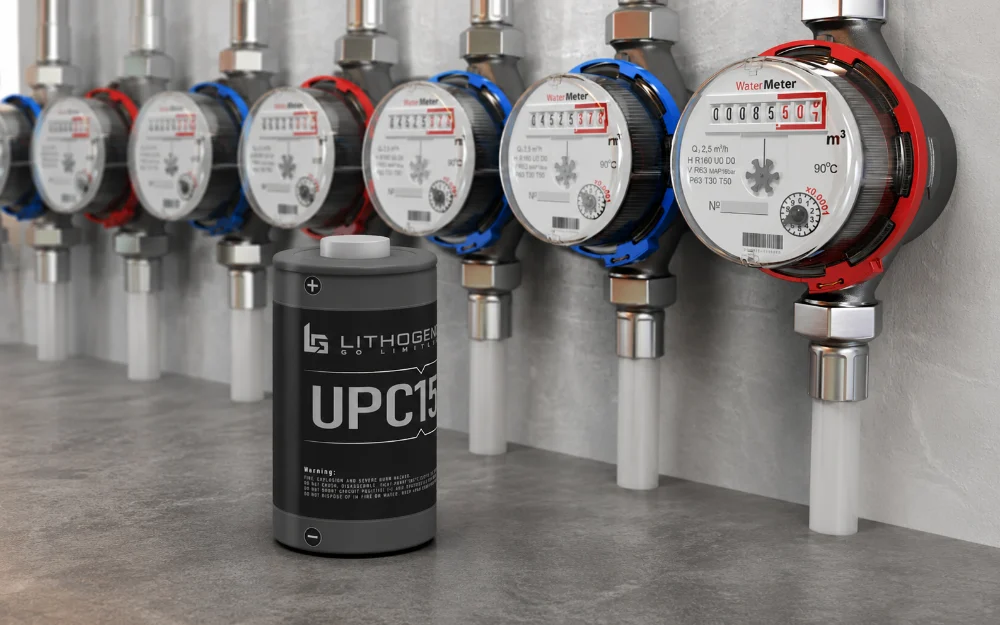
Smart water, gas, and heat meters may remain in operation for years with limited access to external power or routine battery replacement. Their batteries must support extremely low standby consumption while responding reliably to short current peaks when the meter measures, processes, and transmits data.
Selecting a smart meter battery therefore requires more than comparing nominal capacity. Service-life targets, communication frequency, pulse load, storage period, operating temperature, available space, and end-of-life voltage must be evaluated together.
Multi-Year Field Operation
Low self-discharge and efficient energy use are essential for meters expected to operate unattended over extended service periods.
Reliable Pulse Response
Wireless communication modules can create brief current peaks that must be supported without excessive voltage drop.
Stable Performance
Battery output must remain consistent during storage and operation across the temperature conditions expected in the target market.
Meter-Specific Integration
Cell size, terminals, wires, connectors, and mounting configuration must fit the enclosure and electrical interface of the meter.
- SMART METER POWER PLATFORMS
Two Power Technologies for Different Meter Architectures
Smart meters do not all follow the same power design. Battery selection depends on whether the meter has access to external power, how much energy it consumes during standby, the current required during communication or actuation, and the expected service life of the device.
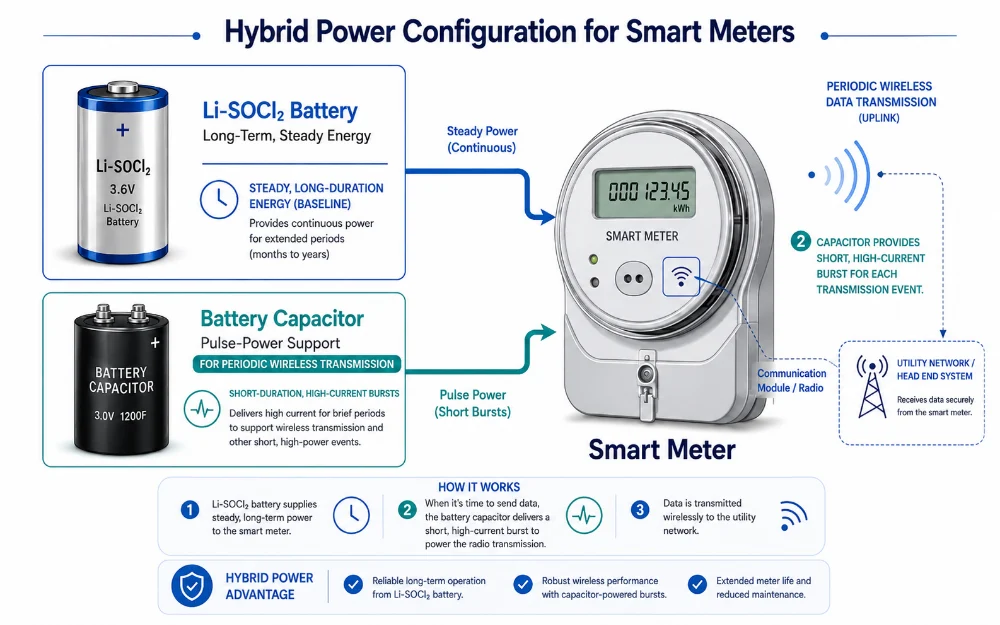
Lithogenix supports smart meter programs with Li-SOCl₂ primary batteries for long-term energy supply and battery capacitors for backup or short-duration power demands. In selected systems, the two technologies can also be combined into a hybrid configuration.
Li-SOCl₂ Primary Batteries
Explore Our Li-SOCl₂ Batteries
Long-Term Energy for Battery-Powered Meters
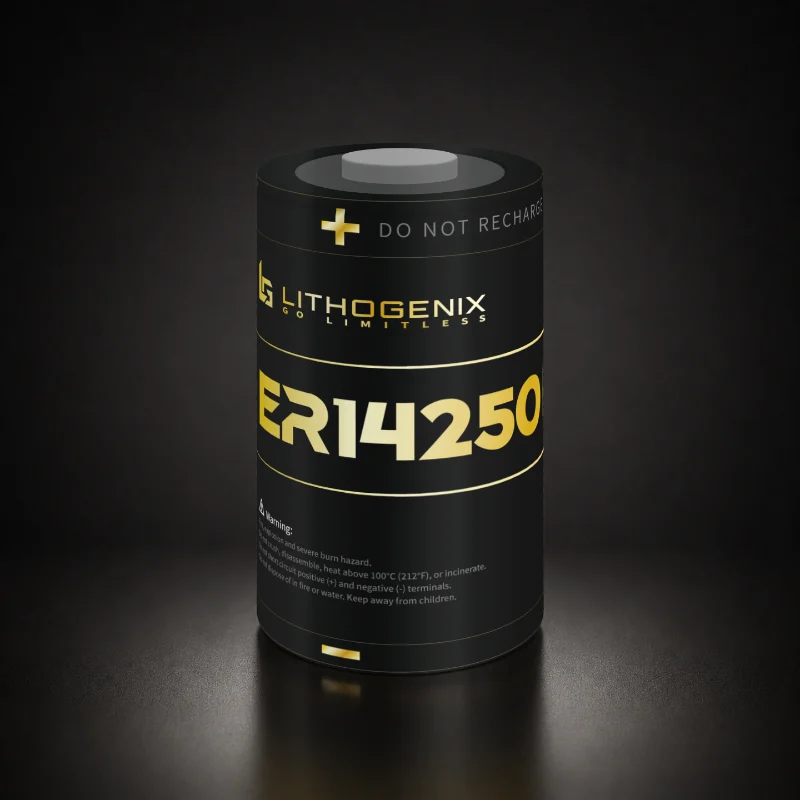
Li-SOCl₂ batteries are suited to metering devices that must operate independently for extended periods with limited access for battery replacement. They provide the stored energy required for sensing, data recording, control functions, and periodic communication.
Key Characteristics
- Low self-discharge
- High energy density
- Long standby capability
- Stable performance across changing temperatures
Battery Capacitors
Explore Our Battery Capacitors
Backup and Pulse Support for Connected Meters
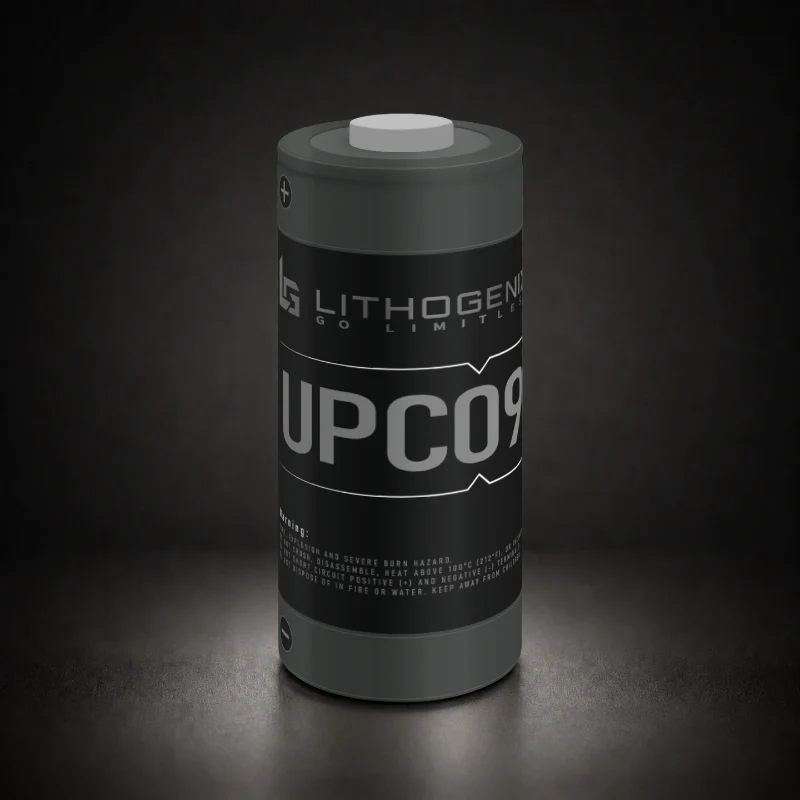
Battery capacitors provide rapid energy delivery for functions that create short periods of higher power demand. They may support externally powered electricity meters, communication modules, power-loss reporting, or battery systems that require additional pulse capability.
Key Characteristics
- Rapid pulse-power delivery
- Reduced voltage drop during peak loads
- Long standby readiness
- Compact integration into meter electronics
Hybrid Power Configuration
Backup and Pulse Support for Connected Meters
Battery capacitors provide rapid energy delivery for functions that create short periods of higher power demand. They may support externally powered electricity meters, communication modules, power-loss reporting, or battery systems that require additional pulse capability.
Key Characteristics
- Rapid pulse-power delivery
- Reduced voltage drop during peak loads
- Long standby readiness
- Compact integration into meter electronics
The appropriate power platform depends on the meter type, available external power, operating voltage, standby current, pulse profile, communication interval, temperature range, storage period, and target service life.
- OEM DESIGN-IN SUPPORT
Turning Meter Requirements into a Production-Ready Power Solution
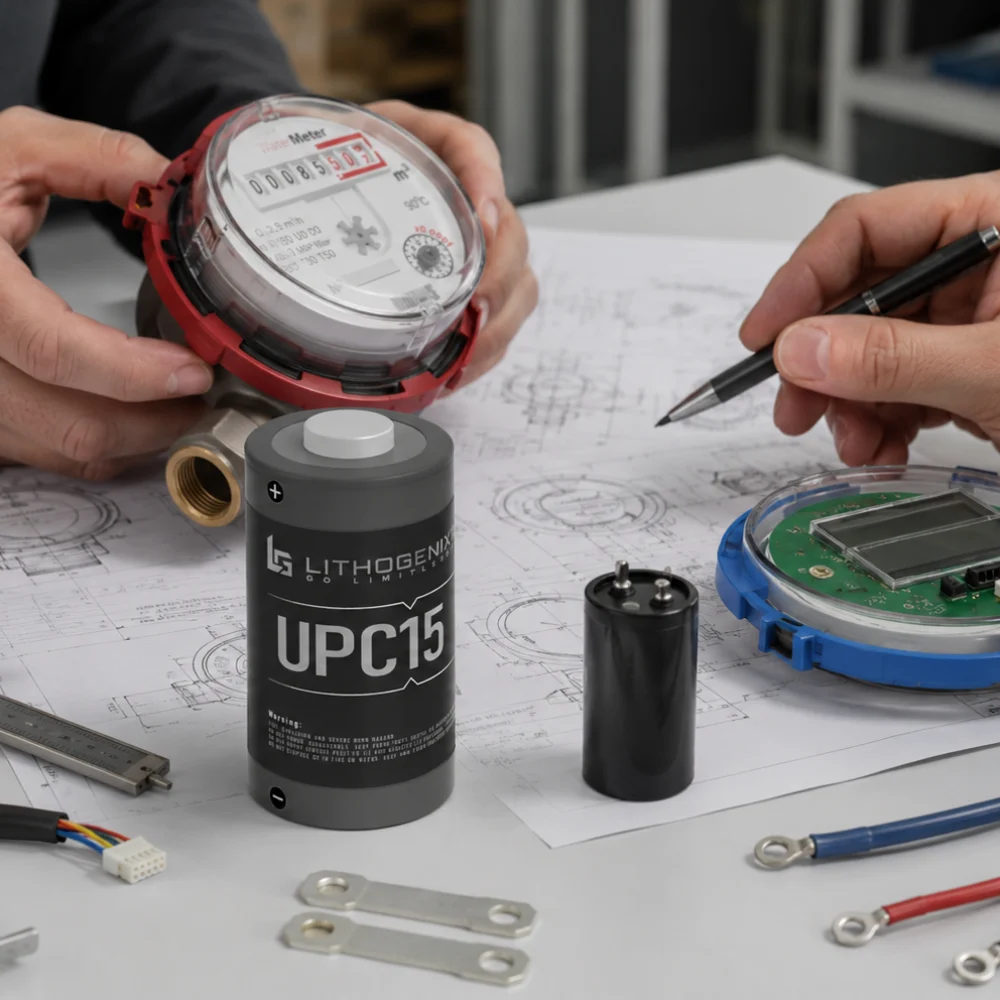
Lithogenix works with smart meter manufacturers to translate electrical, mechanical, and commercial requirements into a defined battery specification. The process considers the complete operating profile of the meter, helping reduce compatibility risks before samples move into pilot and volume production.
Load Profile Evaluation
Standby current, communication peaks, pulse duration, transmission frequency, operating voltage, and expected service life are reviewed together to identify an appropriate power architecture.
Battery and Hybrid System Selection
Based on the meter’s load behavior, Lithogenix can evaluate a Li-SOCl₂ battery, a battery capacitor, or a hybrid configuration that separates long-term energy supply from short-duration peak-power support.
Mechanical and Electrical Integration
Cell dimensions, mounting space, terminals, tabs, wires, connectors, polarity, and insulation requirements are adapted to the meter enclosure and electrical interface.
Sampling and Production Definition
Engineering samples support fit and functional evaluation before the approved configuration is converted into controlled drawings, bill-of-material requirements, labeling specifications, and production documentation.
- OEM DESIGN-IN SUPPORT
Turning Meter Requirements into a Production-Ready Power Solution
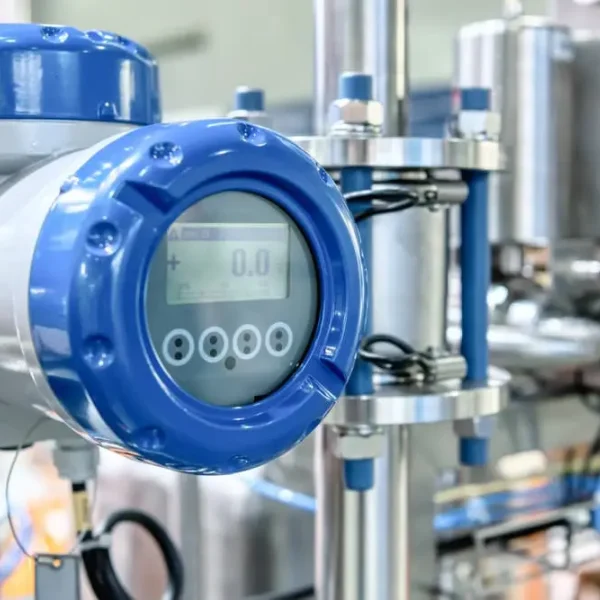
Smart Water Meters
Long-life primary power for battery-operated meters installed in locations where routine battery replacement may be difficult.
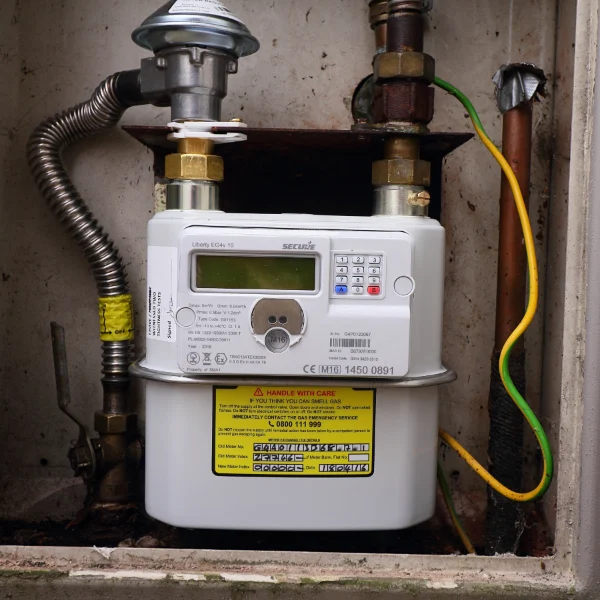
Smart Gas Meters
Reliable energy supply and pulse support for measurement, wireless communication, and selected valve-control functions.
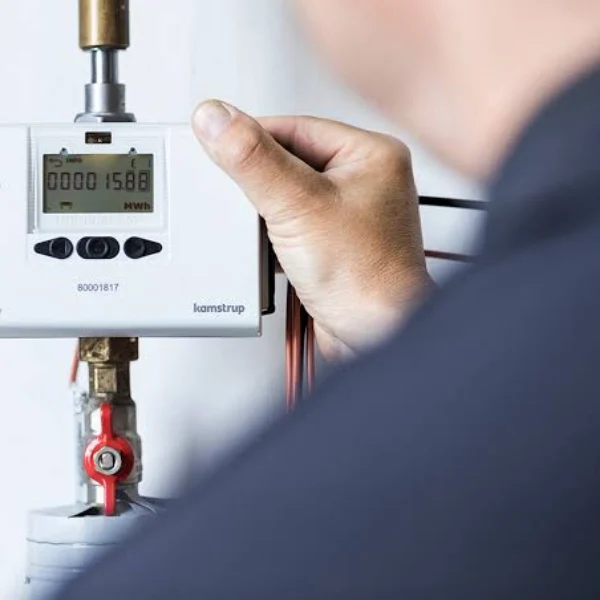
Smart Heat Meters
Stable long-term power for consumption measurement, data logging, display functions, and scheduled data transmission.
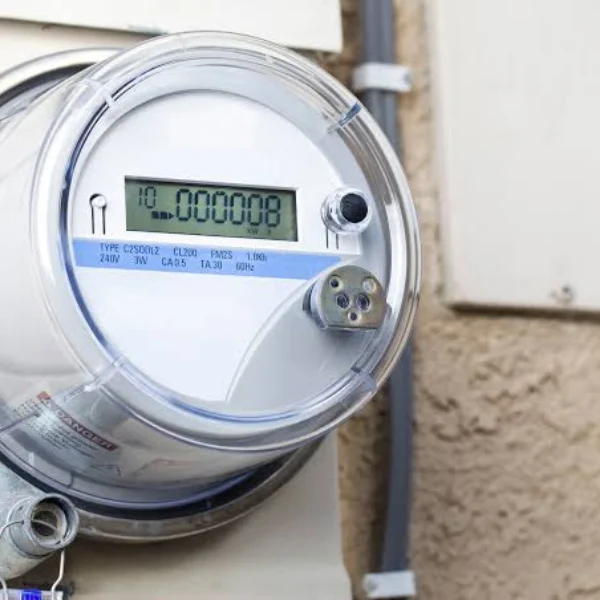
Smart Electricity Meters
Backup and short-duration power support for real-time clocks, data retention, outage reporting, and communication functions.
- FAQs
FREQUENTLY ASKED QUESTIONS
Li-SOCl₂ batteries are commonly considered for meters requiring long-term, low-power operation with limited access for battery replacement. The final selection depends on voltage, standby current, pulse demand, temperature range, storage period, and target service life.
A battery capacitor may be used when the meter requires short bursts of higher power for wireless transmission, outage reporting, valve operation, or other peak-load functions. It can also provide backup support in selected externally powered meter designs.
Yes. In a hybrid configuration, the Li-SOCl₂ battery supplies long-term energy while the battery capacitor supports short-duration peak loads. The configuration must be matched to the meter’s circuit voltage, pulse profile, and operating cycle.
Useful project information includes the meter type, operating voltage, standby and peak current, pulse duration, communication interval, available installation space, operating temperature, expected service life, and forecast quantity.