
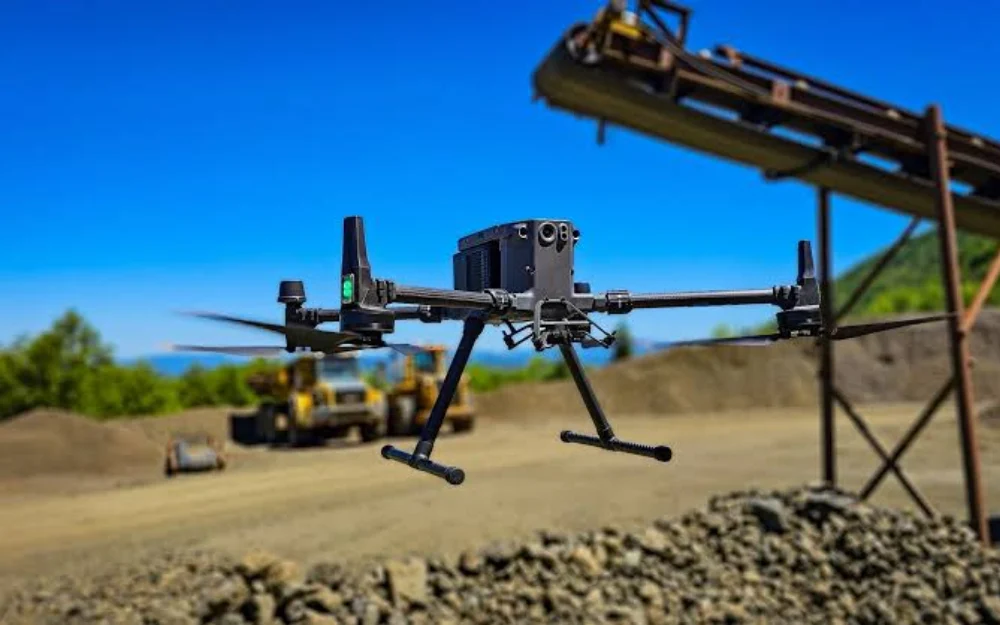
Drone battery lifespan is not the same as flight time. Flight time describes how long one charge can support a mission. Battery lifespan describes how long the pack continues to deliver acceptable energy and power across repeated cycling and calendar time.
A UAV battery rarely reaches end of life simply because it hits a fixed number of cycles. Capacity gradually decreases, internal resistance can increase, and high-load performance may deteriorate. How quickly this happens depends on operating temperature, depth of discharge, current load, storage conditions, and the cell itself. For commercial UAVs, the useful end of life is better defined by whether the battery still meets the mission’s endurance and power requirements than by cycle count alone.
Runtime per Flight and Battery Lifespan Are Different Metrics
When someone asks how long a drone battery lasts, they may be asking two completely different questions.
Runtime per flight describes how long the aircraft can operate after one charge. It depends on usable battery energy, aircraft efficiency, payload, wind, temperature, and the mission profile. UAV research on remaining flight time treats remaining operation until end-of-discharge as a real-time mission problem, rather than as a measure of long-term battery health.
Battery service life describes how the pack changes after repeated use and elapsed time. A 100% state-of-charge reading only means the battery is full relative to its current usable capacity. It does not mean the battery still stores the same number of watt-hours it stored when new.
For example, suppose a new pack provides enough usable energy for a 40-minute mission. After substantial aging, the same pack may still charge normally and display 100%, but reduced capacity might support only 34 minutes under comparable conditions. The change in runtime is a symptom of long-term degradation, not a change in what “100% charged” means.
This distinction is important for commercial UAV fleets because battery health affects mission planning long before a pack stops working completely.
Cycle Count Alone Does Not Tell You How Long a Drone Battery Will Last
A cycle-life number only becomes meaningful when the test conditions behind it are known. Two batteries can each complete 300 cycles and arrive at very different states of health.
NASA’s aerospace lithium-ion testing has evaluated cycle life under different combinations of depth of discharge, temperature, and end-of-charge voltage. The reason is simple: cycle life depends on how the battery is cycled, not merely how many times charging occurs.
Important variables include:
- depth of discharge during each mission;
- charge and discharge current;
- cell temperature;
- operating state-of-charge window;
- time spent at stressful conditions;
- the end-of-life criterion used in the test.
A battery repeatedly used through deep discharge at elevated temperature and high current does not accumulate the same aging history as an identical battery operated with shallower discharge and moderate loads.
Cycle count can also be misunderstood as flight count. A short mission that uses only part of the available energy and is followed by a partial recharge should not automatically be treated as equivalent to a complete deep charge-discharge cycle. Fleet software may calculate usage differently, but the underlying principle remains the same: the amount and severity of energy throughput matter more than simply counting takeoffs.
Research on lift-and-cruise aircraft reinforces this approach. A 2023 transporter-drone study evaluated battery cycle life using a realistic flight operating profile and connected the resulting State of Health data with preventive and predictive maintenance.
So a specification such as “500 cycles” should be read as a conditional test result, not as a universal expiration date.
What Actually Causes Capacity and Power to Degrade?
For UAV operation, battery aging matters primarily because it can reduce both energy capability and power capability.
Capacity Fade Reduces Available Mission Energy
Capacity fade means the battery stores less usable charge than it did when new. At the pack level, that usually means fewer usable watt-hours for the same indicated state of charge.
The practical UAV consequence is straightforward: if aircraft efficiency and mission conditions remain similar, reduced usable energy can shorten endurance or reduce the reserve remaining after the mission.
This is why monitoring only whether a battery can still charge is insufficient. A pack may function normally while its operating margin gradually becomes too small for the original mission.
Resistance Growth Can Reduce High-Load Performance
Aging is also commonly associated with higher internal resistance. A lithium-ion aging review identifies decreasing capacity and increasing resistance as major consequences of battery degradation.
For UAVs, increased resistance matters because voltage drop becomes more pronounced when current rises. The pack may therefore show acceptable remaining capacity during a gentle capacity test yet perform less effectively during takeoff, heavy-payload hover, rapid climb, or another demanding flight phase.
Greater resistive losses can also increase heat generation. As the pack ages, the usable margin between normal operating voltage and the aircraft’s low-voltage limit may shrink under load.
This means an aging battery should not be judged by capacity alone. A UAV designed around demanding current requirements may reach its useful end of life because of power degradation before remaining capacity appears critically low.
The operating conditions that drive degradation are also interconnected. Research on lithium-ion cycle aging has found that cycle aging depends on current rate in addition to factors such as temperature and charge-discharge limits. Depth of discharge and operating state of charge can further change the aging pattern.
This is another reason why the same nominal cell can have very different service life in a low-load mapping UAV and a high-current heavy-lift platform. The underlying battery cell selection and integration should account for the actual mission load, not only nominal capacity.
Storage Matters Because Batteries Age Even When They Are Not Flying
A battery does not need to be cycling to degrade. Calendar aging describes performance loss that occurs with time while a battery is resting or stored.
This is separate from cycle aging. A 2025 study on long-term lithium-ion storage explains that calendar aging continues without external current flow and is strongly influenced by temperature and state of charge. Elevated temperature and high SOC can accelerate side reactions that contribute to capacity loss and resistance growth.
This matters for commercial UAVs that spend long periods between projects, remain as backup packs, or sit charged waiting for deployment. Low flight count does not necessarily mean negligible aging.
Storage therefore belongs in a battery-lifespan discussion, but it should not dominate it. The practical principle is more useful than a universal storage-percentage rule:
- avoid prolonged exposure to excessive heat;
- avoid unnecessarily stressful storage states;
- follow the specific cell or pack manufacturer’s storage requirements;
- remember that calendar time continues to affect battery health even when cycle count stays low.
The correct storage procedure can vary with cell chemistry, pack design, BMS behavior, and manufacturer requirements. A generic consumer storage rule should not be treated as a substitute for pack-specific guidance.
End of Life Should Be Defined by Mission Capability

A UAV battery does not need to be completely dead before it should be removed from a particular mission. For engineering purposes, end of life is better viewed as the point where the pack no longer provides the required energy, power, and operating margin with adequate reliability.
That threshold can differ significantly between applications.
A mapping platform may become limited first by reduced usable energy because the mission requires a defined endurance and reserve. A heavy-lift aircraft may be more sensitive to increased voltage sag and declining power margin. A less demanding secondary application might still be able to use a pack that no longer satisfies the original mission.
This is why State of Health, or SOH, is more useful than cycle count alone. SOH describes battery condition relative to a new or reference state, but it should not be interpreted only as remaining capacity. Power capability and resistance behavior can also matter for the application.
Useful indicators for a commercial UAV fleet can include:
- capacity trend over time;
- cycle or equivalent-use history;
- reduced runtime under comparable missions;
- increasing voltage sag under similar loads;
- unusual temperature rise;
- cell imbalance, physical damage, or other abnormal behavior.
The threshold used to retire a battery should therefore be tied to the aircraft’s mission requirements and safety margin. Research programs themselves use application-specific definitions. The 2023 lift-and-cruise drone study, for example, treated battery cycle-life information as part of maintaining system airworthiness and preventive or predictive maintenance, rather than reducing battery health to a simple flight counter.
For a custom lithium-ion battery pack, this also means cycle-life expectations should be discussed together with the intended discharge profile, operating temperature, required runtime, and power reserve. A cycle-life specification without those conditions provides only part of the engineering picture.
Final Takeaway
Drone battery runtime tells you how long one charge supports a flight; battery lifespan tells you how long the pack continues meeting its mission requirements across repeated use and calendar time. Cycle count is useful, but it does not describe battery health by itself.
Capacity fade can reduce available mission energy, while resistance growth can reduce high-load performance. Cycling conditions, temperature, depth of discharge, current demand, and storage all influence how quickly those changes occur. For UAV applications, the most useful end-of-life decision is therefore mission-specific: retire or reassign the pack when its remaining energy and power margins no longer satisfy the required operating profile.
FAQ
Does a drone battery still degrade if it is rarely used?
Yes. Lithium-ion batteries experience calendar aging even when they are not being cycled. Time, storage temperature, and state of charge can influence how quickly that degradation progresses.
Is 80% capacity always the end of life for a UAV battery?
No. Some test programs and applications use a defined capacity-retention threshold, but there is no single universal end-of-life percentage for every UAV. The relevant threshold depends on the aircraft’s endurance, power, reserve, and reliability requirements.
Does high-current drone operation shorten battery lifespan?
Higher current can increase electrochemical and thermal stress, particularly when the load is sustained or combined with elevated temperature. The actual aging rate depends on the cell design, pack configuration, cooling, depth of discharge, and mission profile.
Can a battery show 100% charge but still have reduced capacity?
Yes. State of charge describes how full the battery is relative to its current usable capacity. An aged battery can reach 100% SOC while storing fewer watt-hours than it did when new.