
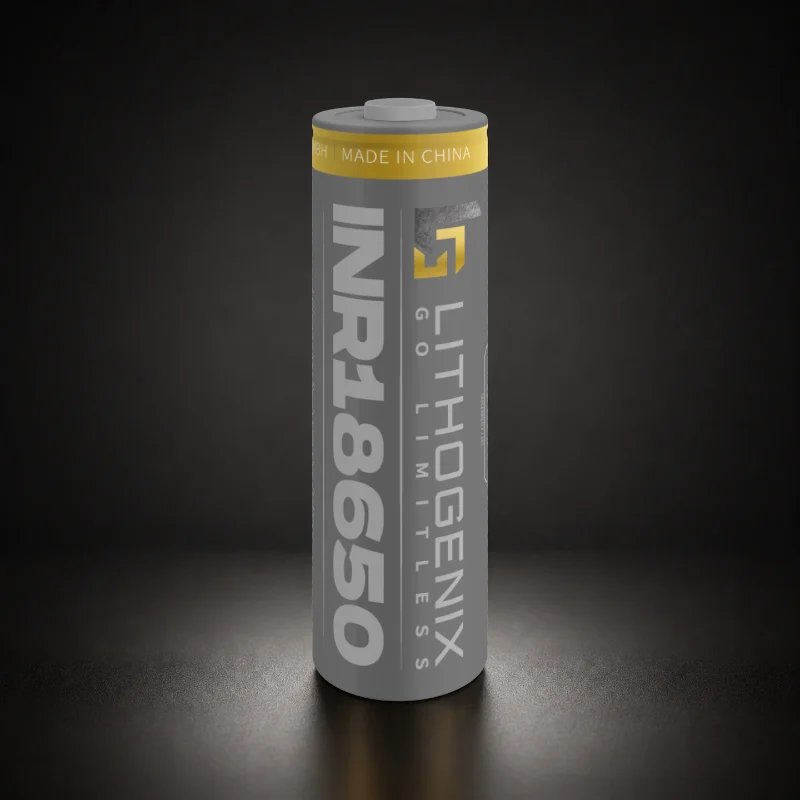
The INR18650P15 Lithium-ion Cylindrical Cell is designed for systems where power delivery takes priority over maximum runtime.
Using an NMC rechargeable lithium-ion chemistry in the standard 18650 format, this cell is optimized to deliver very high current from a relatively small cylindrical package. Its 20C continuous discharge capability and up to 30 A output make it suitable for applications that experience heavy motor loads, rapid acceleration, or repeated high-power operation.
Rather than targeting the highest possible energy capacity, INR18650P15 is intended for battery packs where power density, current capability, and voltage stability under load are more important.
30 A Output from a Compact 18650 Format
The main advantage of INR18650P15 is its ability to deliver substantial current without moving to a much larger cylindrical cell.
A maximum continuous output of 30 A allows the cell to support demanding loads such as motors, pumps, blowers, and other high-power electronics within the familiar 18650 form factor.
This makes it useful when battery pack size and weight still matter, but the application cannot rely on conventional energy-focused 18650 cells with lower discharge capability.
Optimized for High-Rate Discharge
INR18650P15 supports 20C continuous discharge, making it particularly suitable for applications with aggressive power demand.
Typical load conditions may include:
- motor startup
- rapid acceleration
- heavy cutting or drilling
- high suction power
- repeated power bursts
- short periods of sustained high load
Its low internal impedance helps reduce voltage sag during demanding discharge events and can also limit unnecessary heat generation within the cell and pack.
Thermal design, current distribution, cell spacing, busbar sizing, and protection strategy should still be considered at battery-pack level.
High-Rate Charging Capability
Under the stated supplier test conditions, INR18650P15 supports charging at up to 2.6C.
This can be valuable in equipment where shorter turnaround time between operating cycles is important, including professional tools, cleaning equipment, and high-performance battery packs.
High-rate charging should only be implemented within the approved charging voltage, temperature, current, and thermal-management conditions defined for the cell.
The battery management system and charger must be designed around these limits rather than applying the maximum charge rate indiscriminately.
Typical Applications
Cordless Power Tools
Suitable for drills, impact drivers, grinders, saws, fastening tools, and other cordless equipment that requires high current during motor startup and heavy-duty operation.
Cordless Vacuum Cleaners & Floor Care Equipment
Well matched to vacuum cleaners, wet/dry cleaners, floor washers, and similar appliances where high-power motors create substantial discharge demand.
Garden Tools
Applicable to cordless trimmers, blowers, hedge cutters, pruning equipment, and other garden tools that operate under repeated motor loads.
High-Power Handheld Devices
Can be used in portable equipment where a compact battery pack must deliver high power over relatively short operating periods.
Racing Drones & Model Equipment
Suitable for selected high-performance drones, RC equipment, and model systems where rapid discharge and high power density are more important than maximum endurance.
Short-Duration High-Power Battery Packs
A strong candidate for custom battery packs designed around short operating cycles, heavy peak loads, and high power output.
Power-Oriented Rather Than Runtime-Oriented
INR18650P15 is not intended for every 18650 application.
If the main requirement is maximum energy capacity or the longest possible runtime per charge, an energy-focused lithium-ion cell may be a better choice.
INR18650P15 is more appropriate when the battery must repeatedly deliver high current and the system can accept a shorter runtime in exchange for stronger power performance.
This distinction is important when selecting cells for motors, tools, drones, and other applications where peak and continuous load can determine system performance more than nominal capacity alone.
Cycle Performance Under Demanding Test Conditions
Supplier test data indicates approximately 500 cycles under demanding 2.6C charge / 20C discharge conditions.
This data is useful when evaluating the cell for high-power applications, but actual cycle life in a finished battery pack will depend on factors such as:
- charge rate
- discharge rate
- depth of discharge
- operating temperature
- thermal management
- cutoff voltage
- cell balancing
- mechanical and electrical pack design
Lower-stress operating conditions may produce a different cycle-life result than the stated supplier test profile.